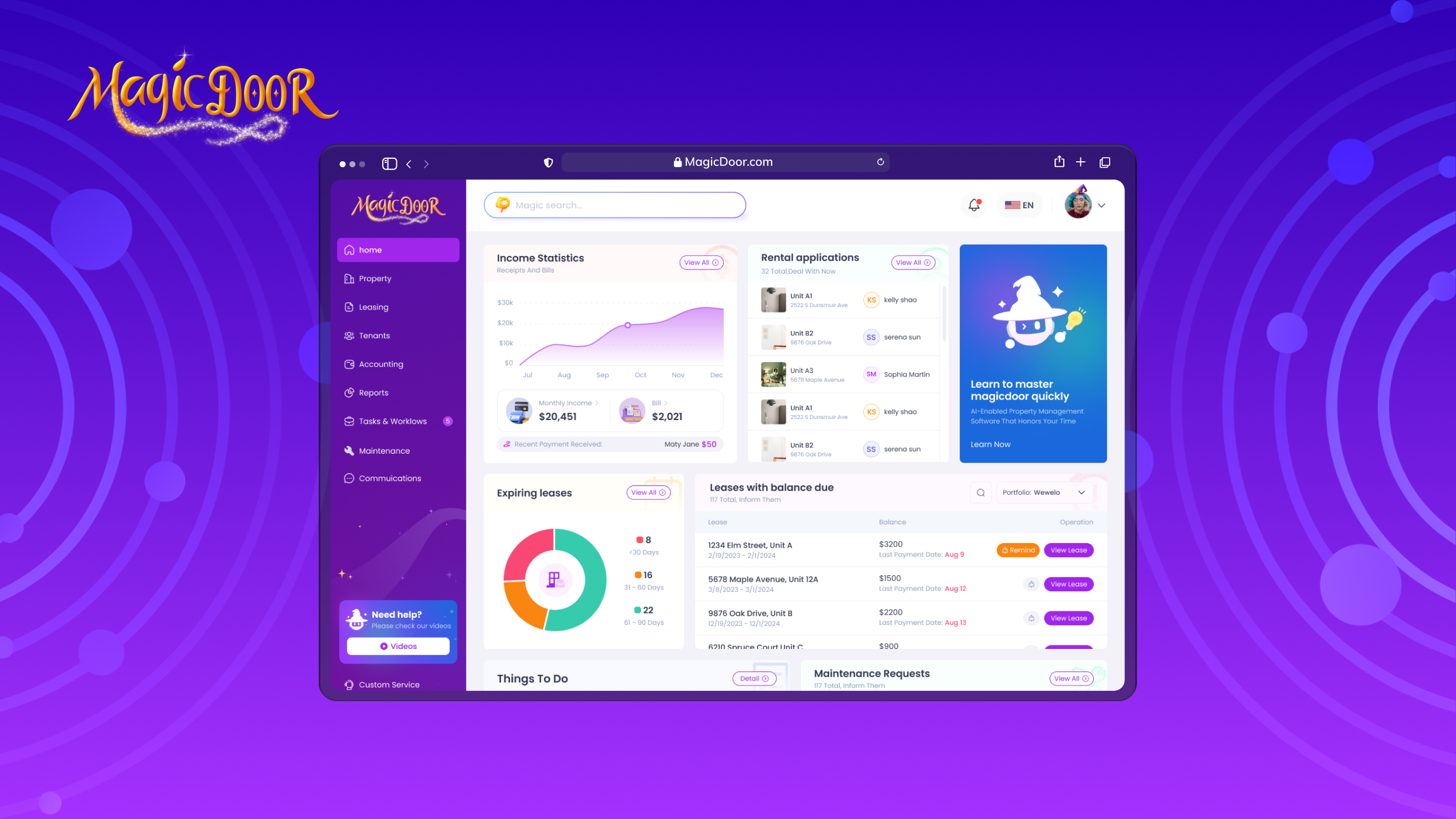
How Owner Statement Software Works for Property Managers
Get expert property management insights, straight to your inbox.
Owner statements often become a quiet source of tension in property management.
Owners want clarity. Managers want reports that don’t require hours of prep or follow-up explanations. Somewhere between rent coming in and expenses going out, the statement becomes the proof of how well everything is running.
This article explains how owner statement software works, what goes into a solid statement, where reporting usually breaks down, and what property managers should look for when choosing a system that supports growing portfolios without adding reporting headaches.
What is an Owner Statement Software in Property Management?
Owner statement software is part of property management systems that generate owner statements, structured financial reports showing how a rental property performed over a specific date range.
A monthly owner statement typically includes rental income, maintenance and repair expenses, property taxes, management fees, and the final net income. Net income is calculated by subtracting total expenses from total rental income, giving owners a clear picture of cash flow and the property’s financial performance.
For property managers, the software pulls financial data directly from rent payments, invoices, receipts, and leases already tracked in the system. That data is automatically categorized, eliminating manual calculations and spreadsheets with property management automation. For property owners and real estate investors, the output feels straightforward: a professional report that explains income sources, costs, and profitability without digging through raw numbers.
Most owner statement software also connects to an owner portal, giving owners 24/7 access to financial reports and important documents from any device. That access supports better communication, fewer emails, and faster approvals for invoices or property improvements.
A typical owner statement generated by the software includes:
- Rental income and other revenue
- Expenses such as maintenance costs, rental house repairs, and taxes
- Property management fees and late fees
- Net income and cash flow for the period
- Property details tied to each report
Why Property Managers Rely on Owner Statement Software?
Ask any experienced property manager what creates the most tension with property owners, and the answer usually circles back to finances. Not because something is wrong, but because owners want a clear understanding of how their money moved during the month.
Owner statement software exists to remove that uncertainty.
For a property management company overseeing multiple rental properties, financial activity can add up quickly. Rent payments arrive on different dates. Maintenance tracking and repairs show up unexpectedly. Property management fees, late fees, and taxes all affect net cash flow.
Manually pulling that information together every month takes time and leaves room for error. Software replaces that manual work with consistent, professional owner statements built from verified financial data.
Property managers rely on this software for a few practical reasons:
| Reason | What it provides |
|---|---|
| Clear financial reports for owners | Statements show total income, maintenance costs, taxes, and net income for each property, giving owners a clear view of performance for a specific date range. |
| Time saved on reporting and paperwork | Automated reports reduce spreadsheets and manual calculations, allowing teams to spend more time on management services and client relationships. |
| Better communication with owners | When statements are easy to review and delivered on a regular schedule, conversations focus on planning rather than clarifying numbers. |
| Support for informed decisions | Regular statement reviews help owners track financial health, identify income and expense trends, and adjust rental rates or budgets when needed. |
| Tax and record-keeping support | Organized financial information supports tax preparation, helping owners identify deductible expenses and maintain accurate records. |
Owner statement software also strengthens long-term relationships.
Clear, consistent reporting builds trust, supports smarter investment decisions, and helps owners feel confident about their portfolio. For property managers, that confidence translates into fewer disputes, smoother renewals, and stronger client retention over time.
How Owner Statement Software Creates Owner Reports
Owner reports don’t start as reports. They start as day-to-day activities inside a property management company.
Rent comes in. Expenses go out. Leases get updated. Repairs happen. Owner statement software pulls all of that financial activity together and turns it into owner statements that owners can actually read and use.
The process works because the software sits at the center of property management operations. Income and expenses are recorded as part of normal management services, not added later for reporting.
Here’s how owner statement software builds reports step by step:
- Captures income and expenses automatically: Rent, fees, and other income are logged alongside expenses for maintenance, taxes, and operations. Tracking income as money moves provides a clearer view of profitability.
- Organizes data by property and time period: Each report reflects a specific date range and property. Owners can fully understand how a single investment performed or review trends across multiple properties.
- Calculates performance metrics: The software summarizes income, expenses, and cash flow to show property performance and financial results. Manual calculations and spreadsheets are no longer part of the workflow.
- Generates structured owner statements: Reports include property details, income, expenses, cash flow, and owner distributions. The layout remains consistent, helping owners review statements month after month without confusion.
- Delivers reports through an owner portal: Owners access statements alongside other financial information, improving communication and reducing back-and-forth questions.
Regularly reviewing these reports helps property owners monitor the property’s financial health, identify trends tied to occupancy rates or costs, and make informed decisions about budgets, rental rates, and long-term financial goals.
For property managers, owner statement software turns everyday financial activity into reliable reports that support management and client confidence.
How to Write a Statement of Ownership
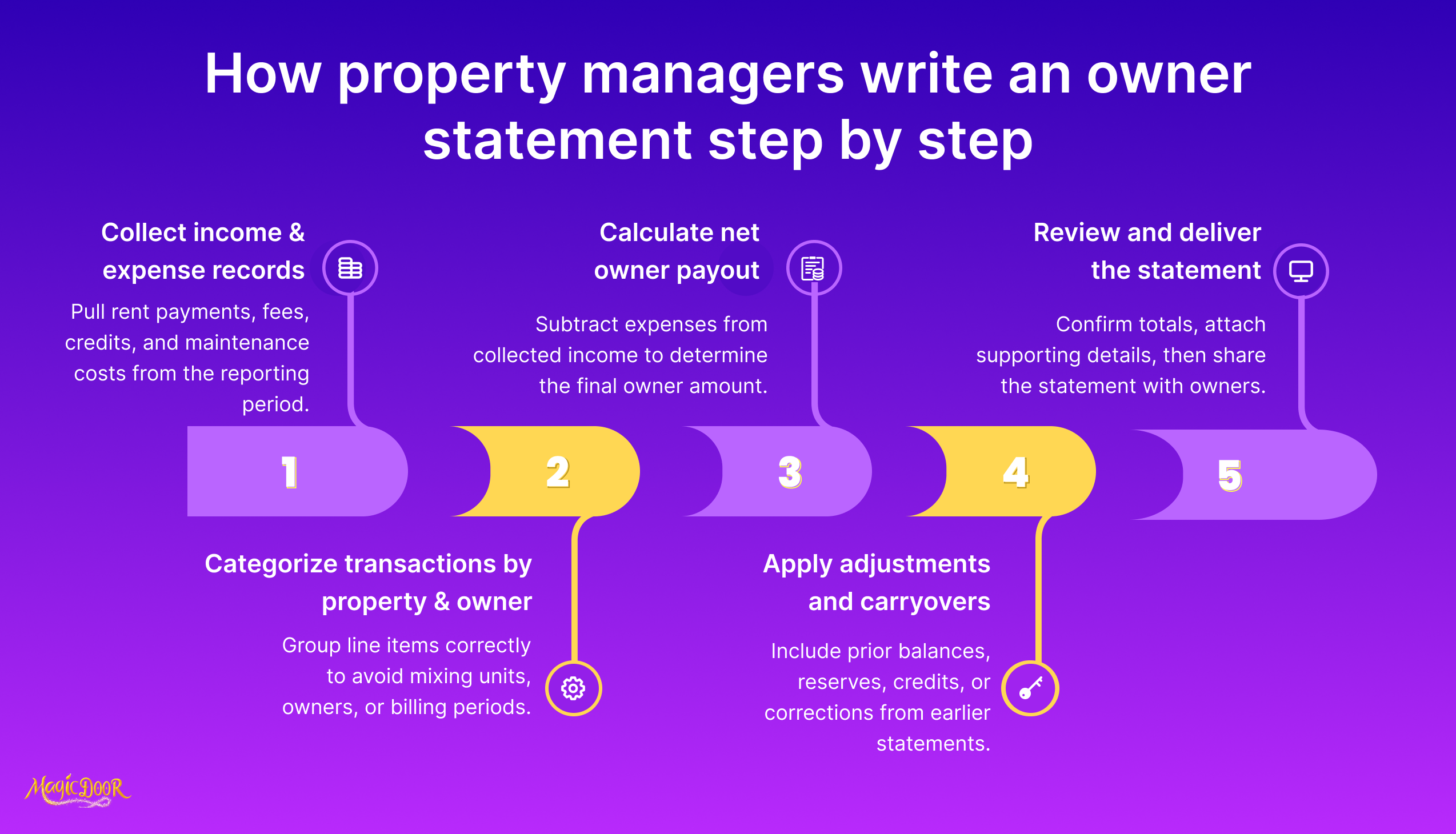
A statement of ownership works best when it answers the questions property owners actually care about: How did the property perform, where did the money go, and what does that mean for future decisions?
While statements can be written manually, most property management services rely on software to generate them.
Software automatically pulls data from leases, payments, and expenses, reducing errors and keeping reports consistent. For owners, that means clearer insight into finances. For managers, it means less time spent formatting reports and more time managing properties effectively.
Here’s how property management experts approach it:
1. Start With the Property & Reporting Period
Every statement needs context. Begin with the property address, owner name, and the date range covered. This helps owners quickly connect the report to the right rental property and avoids confusion when reviewing multiple statements across a portfolio.
2. List All Income Sources Clearly
Income should be easy to follow. Rent payments usually make up the majority, but include any additional income sources tied to the rental business. Showing total income upfront gives owners a clear view of revenue before expenses are taken into account.
3. Break Down Expenses in Plain Language
Expenses related to maintenance, repairs, taxes, and services should be grouped logically. Avoid vague labels. Clear categories help owners understand how costs affect a property’s profitability and support better budgeting and planning.
4. Show Net Results for the Period
After income and expenses, summarize the outcome. This section highlights how the property performed financially during the period and supports informed decisions around rental rates, improvements, or future investments.
5. Add Notes That Provide Context
Numbers tell part of the story. Short notes explain changes tied to occupancy rates, repairs, or seasonal demand. That context helps owners fully understand performance without needing a follow-up conversation.
6. Keep Statements Consistent & Regular
Scheduling regular statements builds trust. When owners receive reports in the same format each period, trends become easier to spot and financial planning feels more predictable.
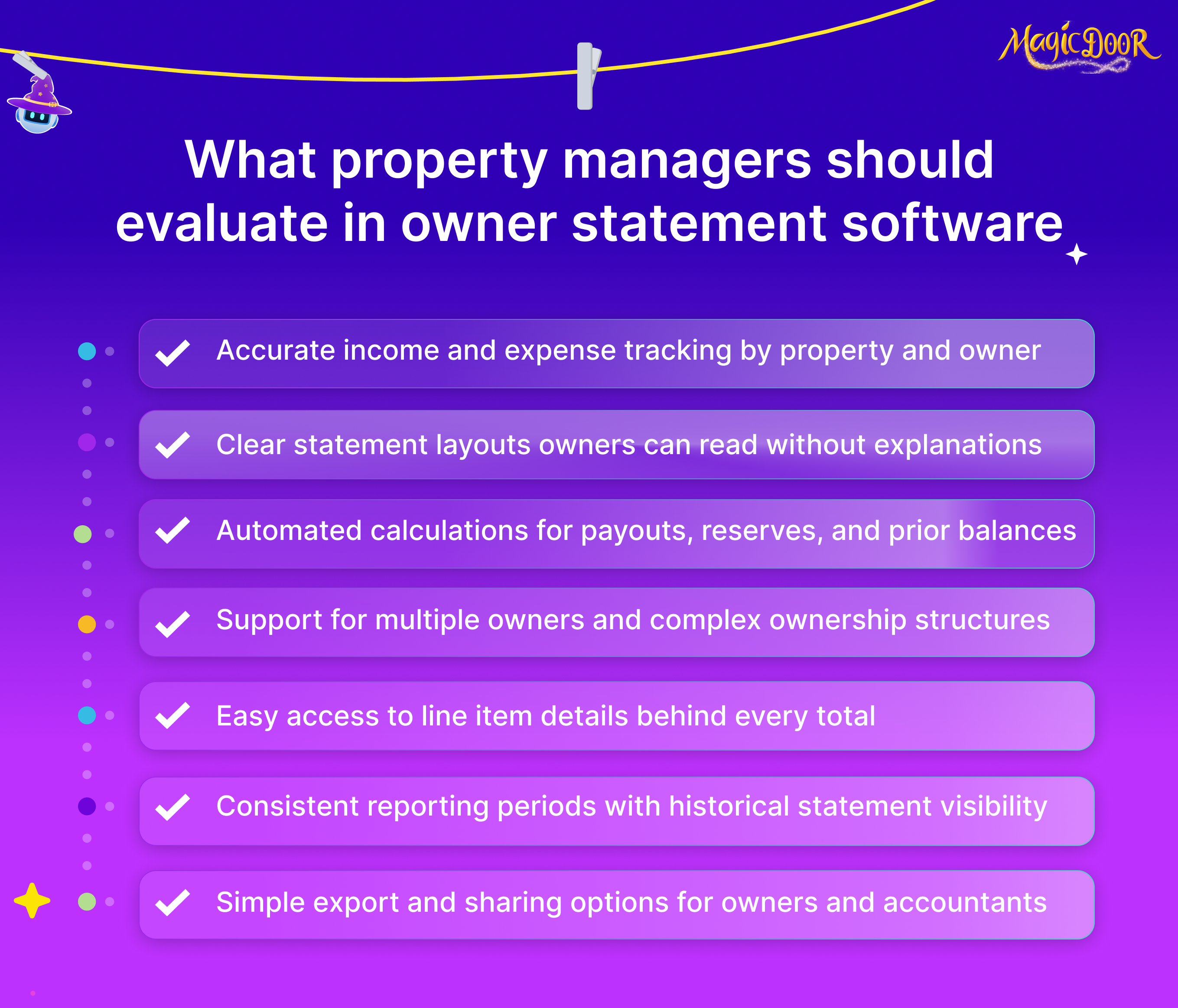
What Property Managers Should Look For in Owner Statement Software
Clear Owner Statements That Are Easy for Property Owners to Read
Picture an owner opening a statement late at night, scrolling on a phone, trying to answer a simple question before bed: Did the property do well this month?
If the answer isn’t obvious within seconds, frustration follows.
Readable owner statements respect that moment. Income appears where the eye expects it. Expenses are grouped into categories that are familiar to anyone running a rental business. Totals stand apart visually, so owners don’t hunt for meaning buried in rows of numbers.
The reporting period remains visible throughout, anchoring the data to a real month rather than an abstract report.
When statements read smoothly, owners stop second-guessing the numbers. Reviews for tax purposes become easier. Conversations about setting rental rates or planning improvements stay focused on decisions rather than interpretation.
Over time, statements stop feeling like paperwork and become a practical financial snapshot that owners use.
Accurate Income, Expenses, & Fees Pulled From Property Data
Accuracy problems usually start long before the statement is generated. They appear when financial information is touched too many times.
Manual adjustments, exported spreadsheets, and copied totals introduce risk at every step. Owner statement software avoids that path by building reports directly from property data already recorded during daily operations.
Rent payments, maintenance costs, and fees tied to agreements appear on the statement exactly as recorded, without later reinterpretation.
Because the report reflects real transactions, owners reviewing income and expenses can follow the logic without needing clarification. The numbers align with the activities they already recognize from the month.
Managers avoid rework. Reports remain reliable across multiple periods, making long-term planning, budgeting, and performance reviews much easier to manage for growing portfolios.
Review & Approval Controls Before Sending Owner Statements
Sending an owner statement locks the numbers in place. Once a statement is sent out, every figure becomes part of the record, so mistakes carry more weight than usual.
Review and approval controls exist to slow things down just enough before that moment.
Property managers benefit from workflows that allow reports to be reviewed internally before owners ever see them. Draft statements give teams space to double-check income, expenses, and fees tied to each property. Adjustments stay contained. Nothing reaches owners prematurely.
Approval controls are especially useful when multiple people touch the same data. A bookkeeper prepares the numbers with bookkeeping software for property management. A manager reviews the totals.
Final approval confirms the statement reflects what actually happened during the period. For portfolios with several owners, this step reduces the need for later corrections and protects relationships built on reliable reporting.
Situations where review controls matter most include:
- Months with unusual maintenance or repair costs
- Ownership changes or updated agreements
- Adjustments tied to late fees or credits
- End-of-quarter or year-end reporting
Review tools don’t slow teams down. They protect accuracy before statements become permanent.
Owner Portals With Access to Current & Past Statements
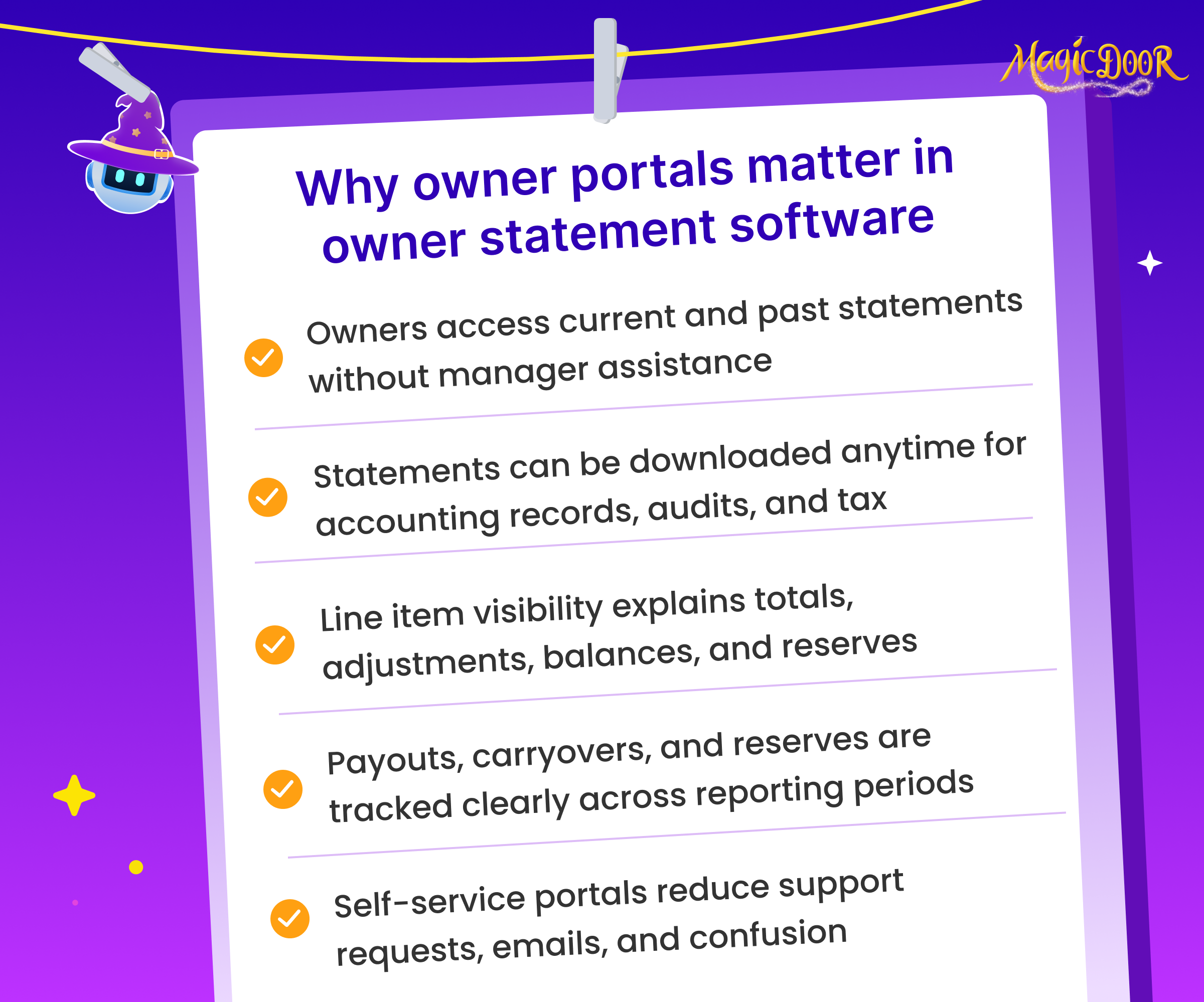
Owners rarely look at statements in isolation. Questions frequently come from comparisons: last month versus this one, or this year versus the previous year. Portals that provide access to both current and past statements support that kind of review without extra requests.
A well-designed owner portal keeps statements organized by property and date. Owners log in, pull up the most recent report, then move backward as needed to track income, expenses, or changes in profitability. No emails. No attachments. No waiting.
Access to historical statements helps owners:
- Review trends across multiple reporting periods
- Prepare for tax purposes using consistent records
- Evaluate performance tied to occupancy or expenses
- Plan budgets with real data from past months
Portals also help property managers. Fewer document requests land in the inbox. Conversations stay focused on planning rather than document retrieval.
Over time, owners grow more confident reviewing financials independently, which strengthens long-term working relationships.
Support for Multiple Properties & Ownership Structures
Owner statements stop being simple once ownership is no longer simple.
A single owner may hold several rental properties. Another property may have multiple owners with different percentage splits. Software needs to reflect those realities without forcing managers to rebuild reports manually every month.
Owner statement software should allow each property and ownership structure to operate within the same system while keeping financials separate where required. Income, expenses, and distributions must align with ownership agreements, so owners see only the data tied to their investment. Statements that mix numbers or blur ownership boundaries create confusion fast.
Situations where this support becomes essential include:
- One owner holding several properties under a single portfolio
- Properties shared by multiple owners with defined percentage splits
- Ownership changes tied to new agreements or partners
- Portfolios that grow gradually rather than all at once
When ownership logic is handled correctly inside the software, statements stay accurate without custom work. Managers avoid manual adjustments, and owners review reports with confidence that the numbers reflect their actual stake.
Direct Connection to Rent Collection & Expense Tracking
Owner statements lose credibility when numbers come from somewhere other than day-to-day financial activity. Manual exports, copied spreadsheets, and late adjustments introduce uncertainty that shows up during owner reviews.
Owner statement software works best when reporting pulls directly from rent payments and recorded expenses.
Rent appears on statements as a post-payment. Maintenance costs, invoices, and fees show up as soon as they are logged. Financial reports reflect what happened during the period, not what was reconstructed afterward.
A direct connection supports cleaner reporting in several ways:
- Income updates as rent is received
- Expenses reflect recorded invoices and repairs
- Fees align with lease agreements and management terms
- Statements remain consistent from one period to the next
Owners reviewing statements can trace numbers back to real activity without needing clarification.
Managers spend less time reconciling data and more time focusing on property performance, budgeting, and planning for future reporting cycles.
Standardized Statement Formats That Stay Consistent Every Month
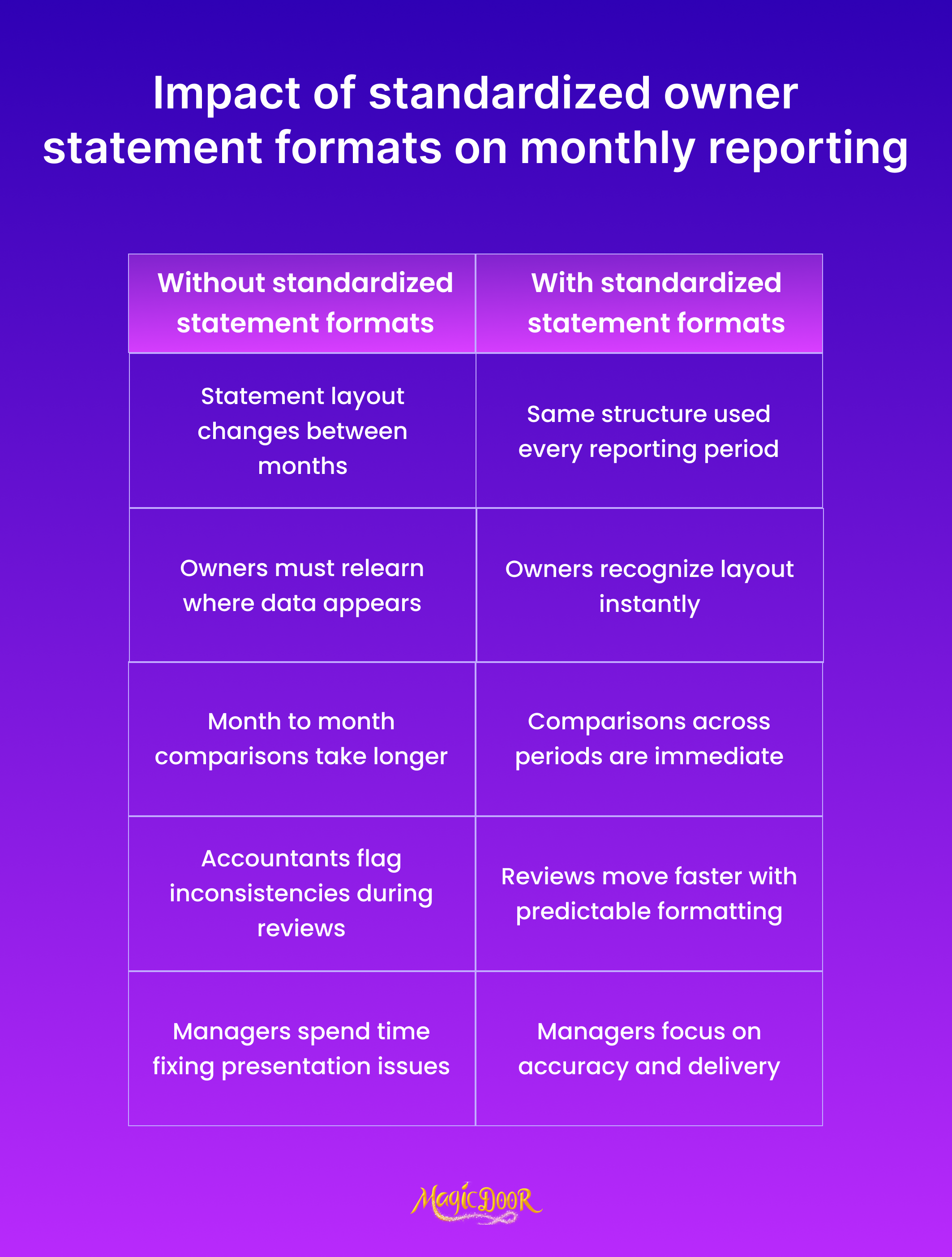
Consistency matters more than creativity when owners review financial reports. Owners compare statements month to month, sometimes quarter to quarter, looking for patterns in income, expenses, and overall results.
A changing layout forces owners to relearn how to read the report every time, which slows understanding and invites unnecessary questions.
Owner statement software should lock the format in place. Headings stay in the same order. Totals appear in the same locations. Reporting periods are clearly labeled and never move. When statements arrive on a regular schedule and look familiar, owners spend less time orienting themselves and more time reviewing performance.
Standardized formats help in a few important ways:
- Easier comparison between months
- Faster review for owners with multiple properties
- Fewer clarification requests sent to managers
- Cleaner records for budgeting and tax review
Predictability builds confidence. Owners know where to look, what to expect, and how to interpret the numbers without guidance.
Detailed Breakdowns That Reduce Owner Questions
Most owner questions come from missing details, not missing totals. A single expense number raises eyebrows when there’s no explanation behind it. Detailed breakdowns solve that problem before it reaches your inbox.
Owner statement software should clearly separate income sources, expenses, and fees so owners can follow the story behind the numbers. Maintenance costs should indicate the type of work performed. Fees should reflect what was charged and why. Income should reflect rent and other sources without lumping everything together.
When detail is handled correctly, owners can:
- Understand why expenses changed during the period
- See how individual costs affect overall profitability
- Review statements without asking for supporting context
- Prepare financials for tax purposes with fewer follow-ups
Detailed reporting doesn’t overwhelm when it’s structured well. It answers questions quietly, keeps communication focused, and allows owner statements to stand on their own without extra explanation from the management team.
What Should You Include in an Owner Statement?
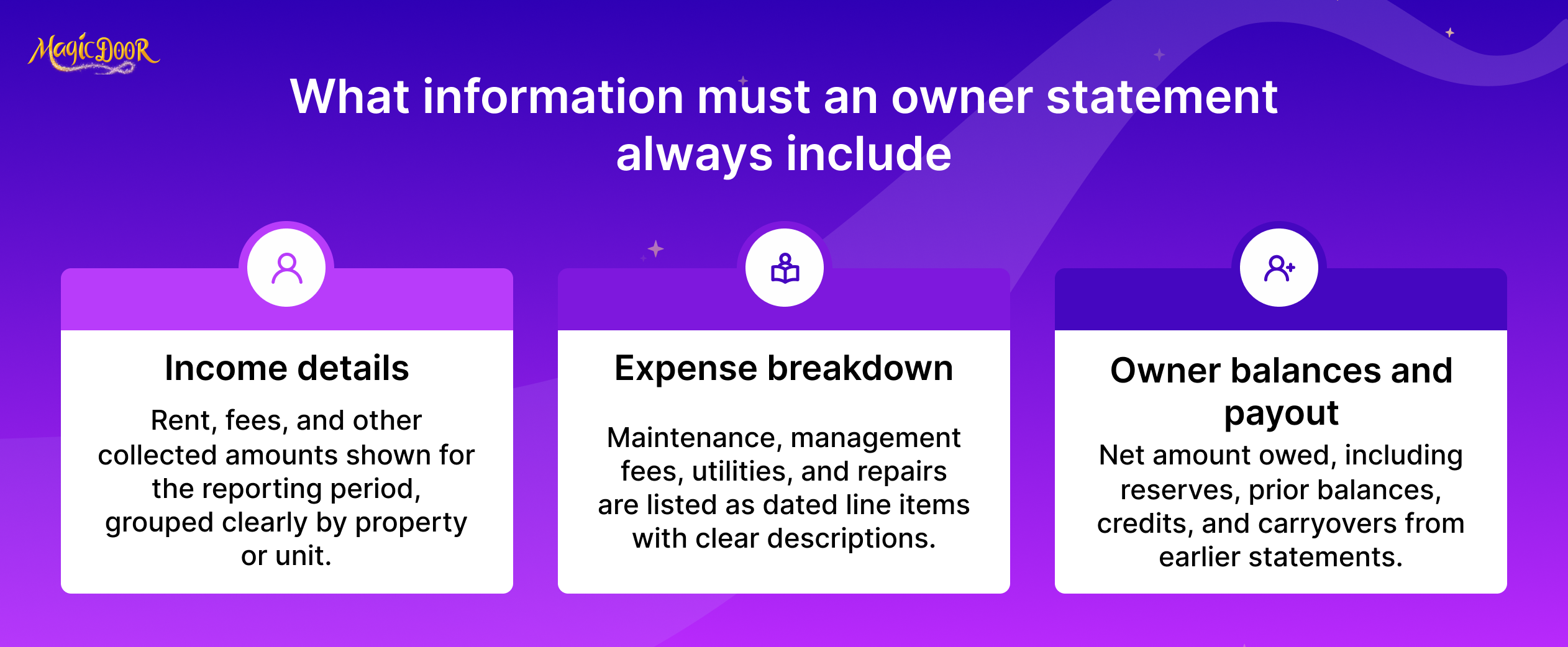
An owner statement should answer one core question for property owners: How did the property perform during this period, and why? Everything included should support that understanding without forcing extra explanations or follow-ups.
Owner statements that work well usually cover the same essentials every time, presented in a predictable order.
Sections every owner statement should include:
- Property details and reporting period: The property name or address, owner name, and the exact date range covered. Clear context prevents confusion when owners review multiple statements within a portfolio.
- Income summary: Rent payments and any additional income sources listed clearly. Owners should see the total income upfront before expenses are taken into account.
- Expense breakdown: Costs grouped by category, such as maintenance, repairs, property taxes, and management fees. Descriptions help owners understand where money went during the period.
- Net results: A clear summary showing how income and expenses combine to reflect profitability for the month. Owners rely on this section to evaluate financial performance quickly.
- Owner distributions and balances: Funds paid out, retained balances, or amounts scheduled for future disbursement. This section links performance to actual cash flows.
- Supporting notes or explanations: Brief context for unusual expenses, repairs, or changes in income. These notes reduce questions and support better decision-making.
When the same sections appear in the same order every month, owners gain a clearer picture of trends, property health, and long-term performance without needing extra guidance from the management team.
Common Owner Statement Reporting Mistakes
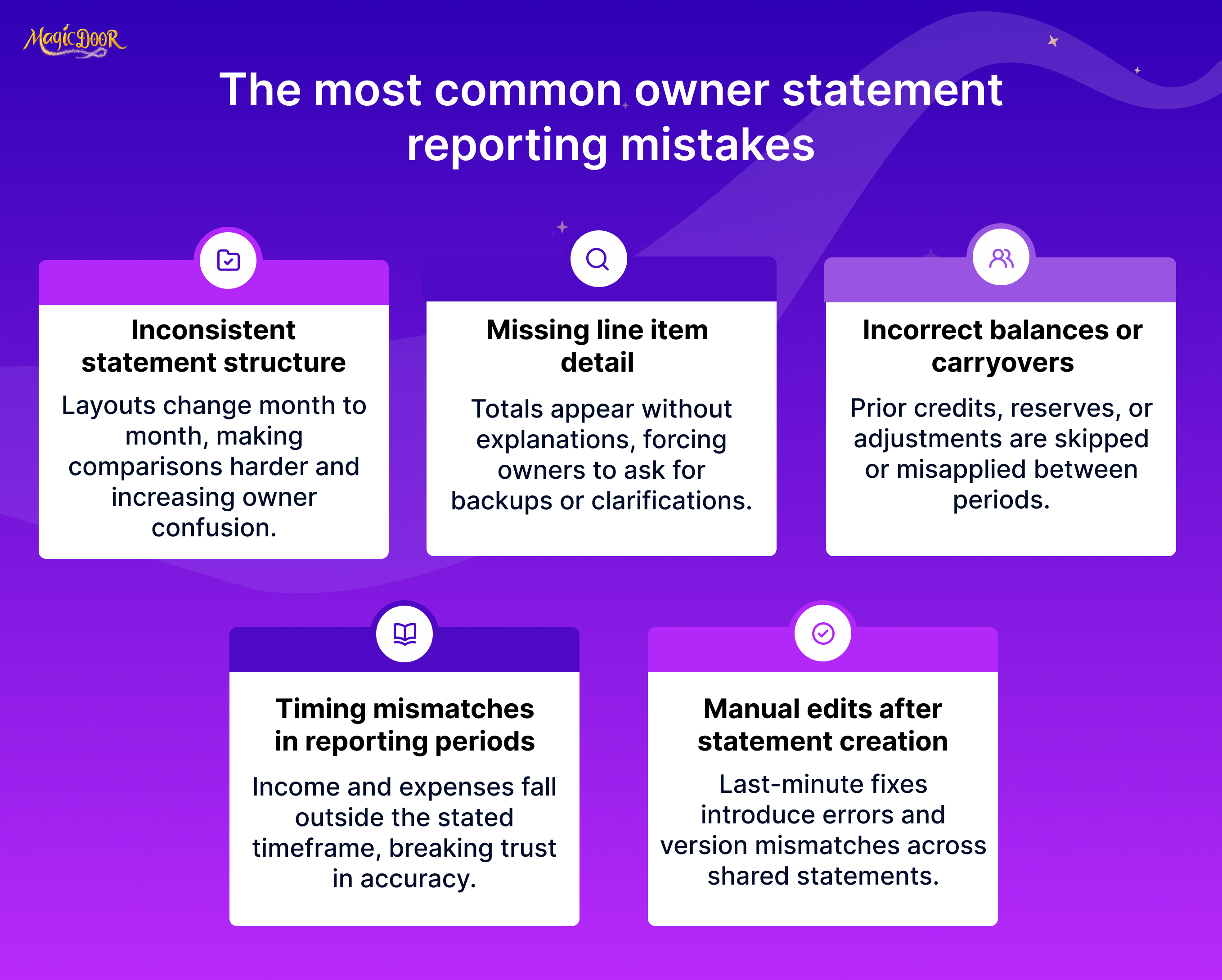
Most owner statement issues follow the same patterns, regardless of portfolio size or market. Listing them clearly helps owners and property managers recognize problems faster.
The most common owner statement reporting mistakes include:
- Changing statement layouts month to month: Owners struggle to compare performance when income, expenses, or totals move around between reports.
- Grouping expenses too broadly: Maintenance, repairs, and fees lumped into one number removes context and triggers follow-up questions.
- Unclear or missing reporting periods: Statements without obvious date ranges create confusion for budgeting, planning, and tax purposes.
- Manual adjustments without explanation: Updated numbers without notes lead owners to question accuracy and intent.
- Late delivery of monthly statements: Delayed reports interrupt financial planning and reduce confidence in management processes.
- Numbers that don’t match real transactions: Statements built outside the system often drift from actual rent payments and recorded costs.
- Missing owner distributions or balances: Owners expect to see how performance connects to funds paid out or retained.
- Inconsistent categorization of income and expenses: Categories that change over time make trend tracking harder.
Clear reporting helps avoid these problems before they become trust issues. When statements stay consistent, detailed, and timely, owners spend less time questioning reports and more time using them to guide decisions about their properties and investments.
MagicDoor Simplifies Owner Statements
MagicDoor takes owner statements out of spreadsheets and side processes and places them directly inside everyday property management work.
Statements are generated using the same data already tied to rent, expenses, leases, and maintenance, keeping reporting grounded in actual activity rather than after-the-fact assembly.
Owner statements stay consistent because the format doesn’t change from month to month. Income, expenses, fees, and distributions follow the same structure every time, making comparisons easier for owners reviewing performance across properties or longer periods.
Statements reflect what happened during the reporting period without requiring manual adjustments or extra explanation.
MagicDoor also simplifies the workflow for managers.
Statements can be reviewed internally before release, then shared with owners through built-in portal access. Owners can view current and past statements in one place, along with supporting financial information and documents, reducing follow-up questions and back-and-forth communication.
What MagicDoor simplifies for owner statements:
- Automatic generation using real rent and expense data
- Consistent statement layout for every reporting period
- Clear breakdowns tied to each property and owner
- Review controls before statements are shared
- Owner access to both current and historical statements
By keeping owner statements connected to daily operations, MagicDoor eliminates the extra steps that usually slow reporting. Managers spend less time preparing statements, and owners gain clearer visibility into how their properties are performing without needing constant clarification.
Conclusion
Owner statement software plays a bigger role than most teams expect.
Clear reports shape how owners understand performance, trust management, and plan future decisions. When statements remain consistent, accurate, and easy to review, conversations move from clarification to strategy.
The right property management software keeps reporting tied to real financial activity, supports multiple ownership structures, and gives owners access to current and past statements without extra work from managers.
For teams looking to simplify reporting while keeping owners informed, MagicDoor offers a practical way to manage owner statements as part of everyday property operations, not as a separate reporting chore.