
Best Real Estate Accounting Software For Landlords
Get expert property management insights, straight to your inbox.
Managing rental property finances isn’t just about balancing numbers, it’s about keeping cash flow predictable, taxes accurate, and owners stress-free. Landlords who rely on spreadsheets or generic tools often waste hours chasing down receipts, tracking rent payments, and preparing year-end reports.
That’s where real estate accounting software comes in. The right platform handles everything from rent collection to owner payouts, helping landlords stay compliant and profitable.
In this guide, you’ll find the 15 best accounting tools for landlords, each with unique features, ideal users, and pricing notes so you can pick the right fit for your portfolio.
What is Real Estate Accounting Software?
Real estate accounting software is built to help landlords and property managers track rental income, expenses, and property performance more effectively than generic accounting tools. Far from spreadsheets or small business apps, these platforms are tailored to the rental process, from rent collection to lease management.
With the right property management software, landlords can:
- Track income and expenses tied to each rental property or unit
- Collect rent online with automated rent reminders and late fee tracking
- Generate financial reports for tax preparation, lenders, or investors
- Monitor cash flow across multiple rental properties or portfolios
- Store lease agreements and security deposits alongside financial data
For independent landlords, this means simpler bookkeeping and fewer errors.
For property managers with large portfolios, it delivers the scale and financial clarity needed to keep operations running smoothly. Whether you manage one unit or a hundred, dedicated real estate accounting tools save time, improve accuracy, and help with tax season planning.
How is Real Estate Accounting Software Different From QuickBooks?
QuickBooks was designed for general business bookkeeping, not the day-to-day demands of managing rental property. Property accounting software addresses gaps that QuickBooks can’t fill for landlords and property managers.
Key differences landlords should know:
- Property-specific tracking: Rental accounting tools tie income and expenses to each property or unit, rather than lumping all transactions together.
- Rent collection: Platforms allow you to collect rent online, apply late fees automatically, and generate reminders. QuickBooks requires workarounds.
- Lease integration: You can attach lease agreements, security deposits, and tenant data directly to the accounting record.
- Tax preparation: Most tools generate Schedule E reports and rental-specific tax outputs, features QuickBooks doesn’t include natively.
- Automation tools: Automated rent payments, expense tracking, and real-time cash flow insights reduce manual work.
For landlords and real estate investors with growing portfolios, the difference comes down to efficiency.
QuickBooks works for generic company financials, but dedicated rental property management software ensures financial reporting, compliance, and daily property management tasks are all handled in one platform.
Top 15 Real Estate Accounting Software For Landlords
1. MagicDoor

MagicDoor combines property management software with built-in accounting tools designed for landlords who want property management automation without hidden fees. Far from platforms that charge per unit or add-ons, MagicDoor offers its features with no subscription cost.
Whether you’re a first-time landlord with one rental property or a property manager overseeing a large portfolio, the platform adapts to your workflow.
Accounting features landlords rely on:
- Online rent collection with automated reminders
- Income and expense tracking tied to each property
- Bank account reconciliation and property accounting reports
- Automated payments and owner distributions
- Custom reports for tax preparation and year-end filing
Ideal user: Any landlord or property manager, from DIY landlords to growing property management businesses handling multiple rental properties.
2. Buildium

Buildium is a well-known property management software for professional managers overseeing mid-to-large rental portfolios. Its accounting features go beyond basic bookkeeping, offering detailed reports and integrations tailored to real estate investors.
Accounting features landlords use:
- Automated rent collection and late fee tracking
- Bank reconciliations and balance sheet reports
- Budgeting tools for property owners
- Tax preparation with Schedule E exports
Ideal user: Property managers and larger rental businesses that need robust reporting and compliance tools.
3. AppFolio

AppFolio offers an all-in-one property management platform with advanced accounting features built for scale. It helps property managers simplify daily tasks while giving owners and investors transparent financial insights.
Accounting features landlords use:
- Online rent collection tied directly to financial reporting
- Automated payments, expense tracking, and owner distributions
- Custom reports and dashboards for portfolio analysis
Ideal user: Mid-size to large property management companies managing multiple properties with complex financial reporting needs.
4. TenantCloud
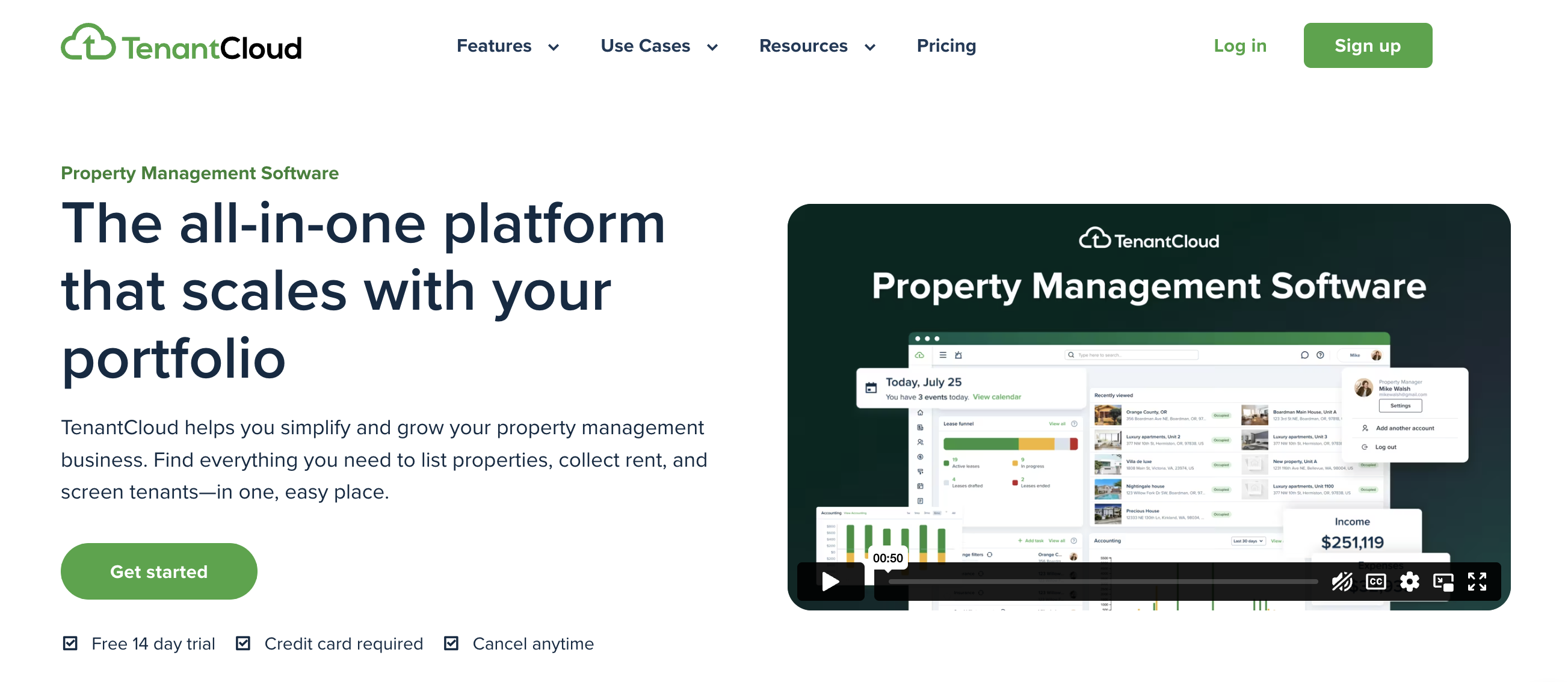
TenantCloud is designed for DIY landlords and small property managers who want affordable accounting tools without a steep learning curve. It combines rental property management software with accessible bookkeeping.
Accounting features landlords use:
- Online rent collection with automatic reminders
- Income and expense tracking by unit
- Customizable financial reports and tax-ready statements
Ideal user: Independent landlords or small portfolios seeking a free plan or affordable upgrade for basic accounting features.
5. Stessa

Stessa was built with real estate investors in mind, offering specialized tools to track the financial health of rental portfolios. It focuses on income and expense tracking and preparing landlords for tax season without the heavy cost of full-scale property management software.
Accounting features landlords use:
- Automated expense categorization and bank account syncing
- Real-time dashboards showing property performance
- Tax-ready reports, including Schedule E
- Mobile app for on-the-go income logging
Ideal user: Landlords managing small-to-medium portfolios who want easy tax prep and performance insights without paying for unnecessary extras.
6. QuickBooks (with Property Management Add-Ons)
QuickBooks is one of the most recognized accounting software platforms, and with the right add-ons, it can function as a property management solution. It’s not built solely for rental property management, but customization makes it useful for landlords who already use QuickBooks for business finances.
Accounting features landlords use:
- General ledger with income and expense tracking
- Integration with third-party tools for rent collection and lease management
- Automated invoices and recurring payments
- Detailed financial reporting across portfolios
Ideal user: Small property managers or landlords who already run QuickBooks want to avoid switching platforms.
7. FreshBooks

FreshBooks is cloud-based accounting software geared toward freelancers and small businesses, but it can also work for landlords who want clean financial reporting. It’s lightweight compared to all-in-one property management platforms, but valuable for those who don’t need full tenant portals.
Accounting features landlords use:
- Expense tracking with receipt uploads
- Customizable financial reports and profit/loss statements
- Automated invoices and payment reminders
- Mobile-friendly dashboards for on-the-go access
Ideal user: DIY landlords with just a few rental properties looking for simple bookkeeping rather than comprehensive property management tools.
8. DoorLoop

DoorLoop is marketed as an all-in-one property management platform with accounting built directly into its core. Unlike general-purpose accounting software, it was designed for property managers and landlords from the start, which makes the financial tools tightly connected with day-to-day rental property operations.
Accounting features landlords use:
- Rent collection with automated late fee tracking
- Chart of accounts tailored for property accounting
- Owner statements and distribution management
- Customizable financial reports with portfolio-level insights
Ideal user: Property management companies or landlords with growing portfolios who need robust management and integrated accounting in one place.
9. Wave
Wave is a free, cloud-based accounting software popular among freelancers and small landlords. While it’s not property management software at its core, its easy-to-use interface makes it appealing for those who only need basic bookkeeping without monthly fees.
Accounting features landlords use:
- Track rental income and operating expenses
- Generate standard reports like balance sheets and P&L
- Automated invoicing and recurring payments
- Integration with bank accounts for real-time updates
Ideal user: DIY landlords or real estate investors managing just a few rental properties who want free accounting tools with simple financial tracking.
10. Xero
Xero is a powerful accounting platform often used by small businesses. It adapts well to real estate investors and property managers. Its strengths lie in scalability and integrations, which makes it a good fit for those who want customizable accounting features beyond rent collection.
Accounting features landlords use:
- Automated bank reconciliation with expense categorization
- Customizable dashboards for portfolio financial tracking
- Integration with third-party property management tools
- Cloud-based reporting for real-time insights
Ideal user: Small-to-midsize landlords or property managers seeking scalable accounting software with flexible integrations for long-term growth.
11. Sage Group
Sage is a global accounting software provider with products tailored to small businesses, including real estate investors and landlords. While not built solely as property management software, Sage offers robust financial management capabilities that landlords can adapt for rental operations.
Accounting features landlords use:
- Strong general ledger and property accounting tools
- Automated bank reconciliation and expense tracking
- Customizable reporting for investment portfolios
- Cloud access for real-time collaboration
Ideal user: Landlords with larger portfolios who want enterprise-level accounting software with flexibility to handle complex financials.
12. MRI Software
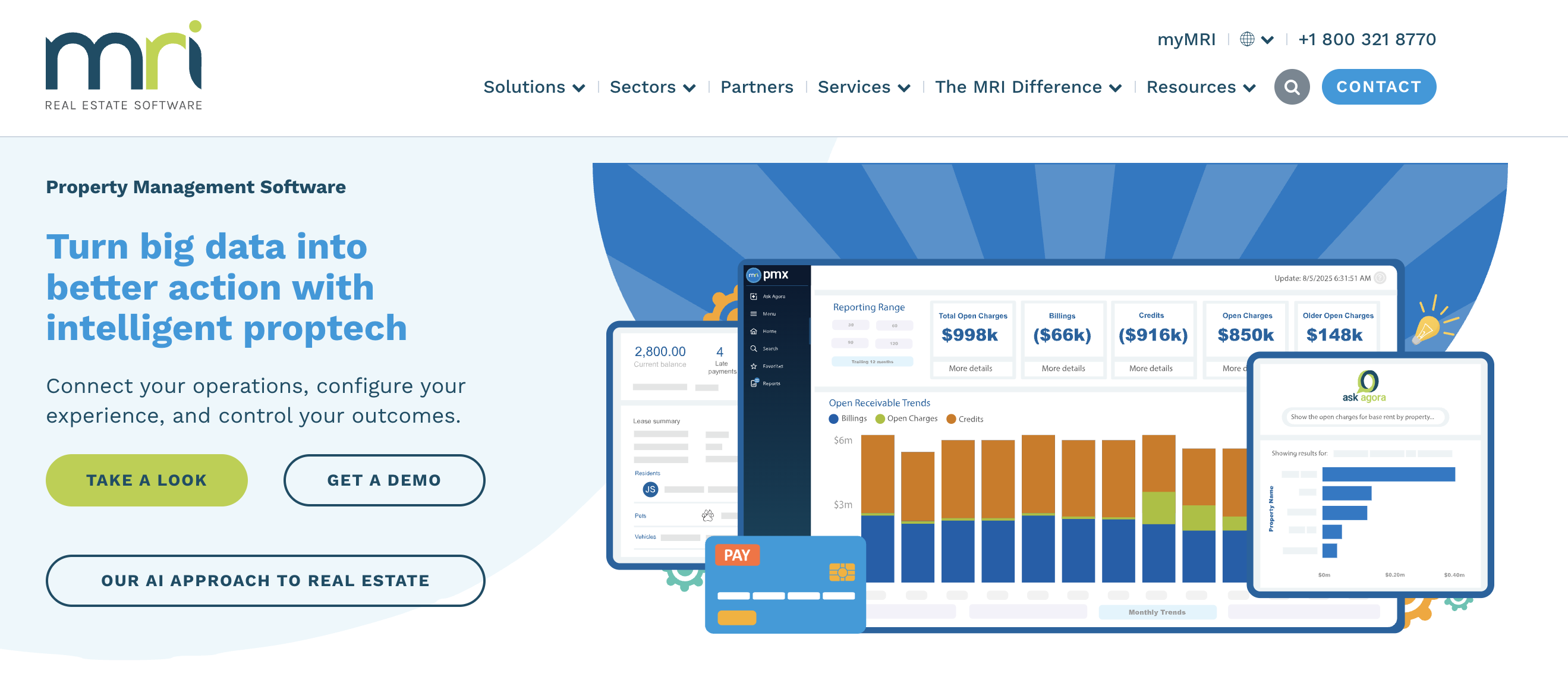
MRI Software specializes in real estate management solutions for both residential and commercial portfolios. Its accounting tools integrate with advanced property management features, making it a trusted choice for professional property managers.
Accounting features landlords use:
- Full-service property accounting with compliance controls
- Budgeting and forecasting tools for large portfolios
- Detailed investment and portfolio performance reporting
- Integration with lease management and tenant tracking
Ideal user: Property management companies and real estate investors handling multiple properties or mixed-use portfolios requiring high-level financial tracking.
13. Rentroom
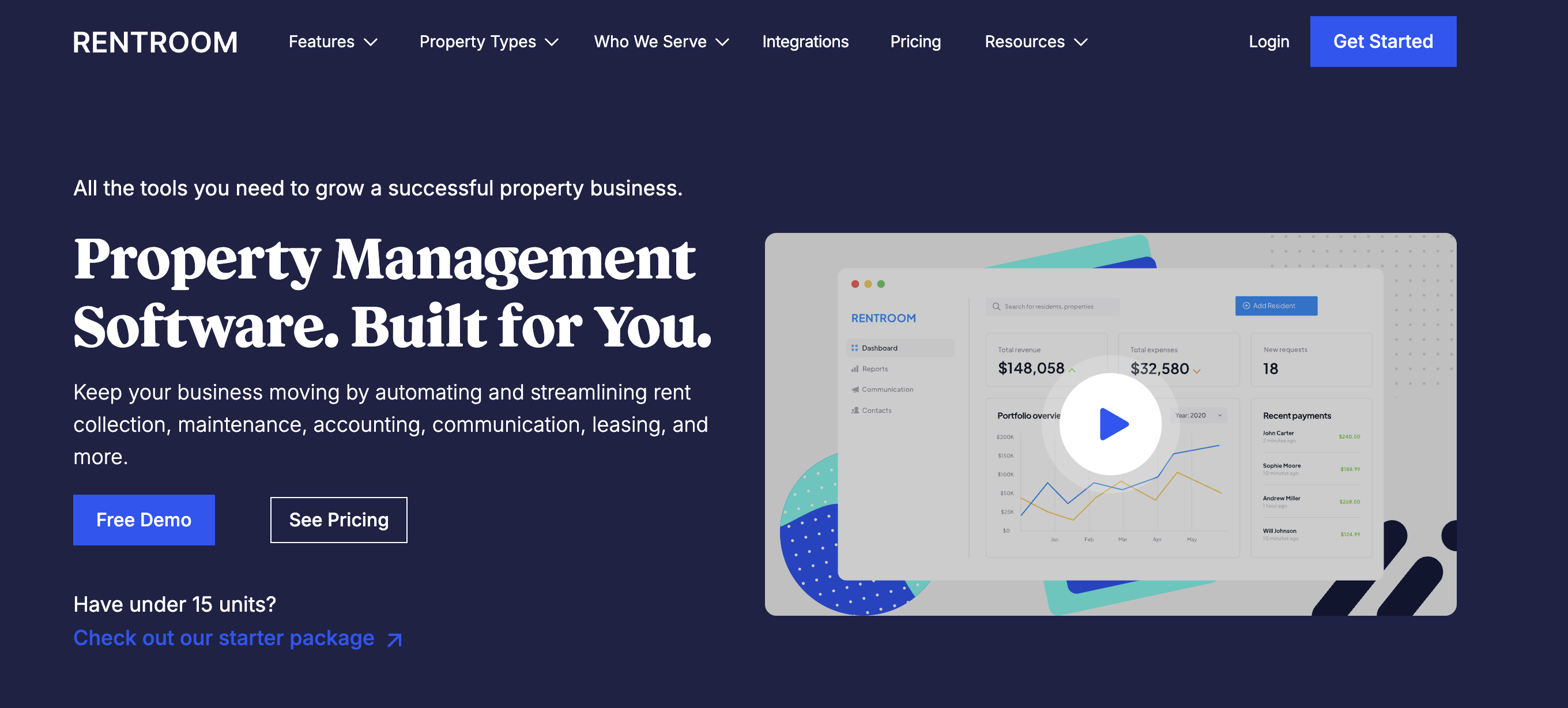
Rentroom is a modern property management software that emphasizes ease of use for landlords while providing built-in accounting tools. It combines rental management with streamlined financial reporting in one intuitive platform.
Accounting features landlords use:
- Automated rent collection with late fee tracking
- Bank integrations for income and expense reconciliation
- Owner and investor reporting dashboards
- Cloud-based access for real-time insights
Ideal user: Independent landlords and small-to-midsize property managers who want a simple, affordable tool that covers both tenant management and property accounting.
14. Quicken

Quicken is one of the most recognizable names in personal and small business accounting software. While not built exclusively as property management software, many independent landlords use it to track rental property income and expenses.
Accounting features landlords use:
- Track rent payments and categorize rental expenses
- Generate Schedule E tax reports for real estate investors
- Integrate bank accounts for seamless reconciliation
- Customizable financial dashboards for portfolio management
Ideal user: DIY landlords with a few rental units who already rely on Quicken for personal finances and want a single tool for both.
15. Baselane

Baselane is a modern financial platform built specifically for landlords and rental property owners. It blends property accounting, rent collection, and banking in one streamlined tool, making it popular with first-time landlords and growing investors.
Accounting features landlords use:
- Free online rent collection with automated deposits
- Expense tracking with smart categorization and receipt storage
- Integrated landlord banking with no monthly fees
- Custom financial reports for better portfolio insights
Ideal user: Small landlords and real estate investors who want an all-in-one accounting and banking platform without paying for a traditional property management suite.
Features to Look For in Landlord Accounting Software
Track Rent Payments & Income by Property
Rent is the lifeblood of a rental business, and landlords need more than a simple balance sheet.
Real estate accounting software links every rent payment to the specific property or unit, creating a clear view of cash flow across an entire portfolio. This goes further than checking deposits in a bank account; you can see which tenants are paid up, which leases have late payments, and how much income each property contributes to the bottom line.
Modern platforms also allow landlords to:
- Collect rent online through ACH, debit, or credit card payments
- Apply automated late fees and reminders to reduce follow-ups
- Track partial payments and tenant payment history for lease compliance
- Generate custom financial reports that break down rent by unit, building, or portfolio
This level of detail helps property managers and real estate investors make data-driven decisions and simplify tax preparation when reporting rental income.
Log & Categorize Rental Property Expenses
Rent tells only half the story. Expense tracking is just as critical, and landlords who don’t categorize costs risk messy books and inaccurate reporting.
Good rental property management software allows every expense, whether it’s a maintenance request, property tax bill, or insurance payment, to be logged directly against the property it belongs to.
Accurate categorization matters because it:
- Separates operating expenses from capital improvements
- Helps property owners maximize deductions during tax time
- Provides real-time insights into property performance and net income
- Creates clean Schedule E reports without hours of manual bookkeeping
Advanced platforms even sync directly with bank accounts and credit cards to auto-import transactions, while allowing receipt uploads for audits. For landlords managing multiple properties, this means less manual entry and more reliable financial tracking.
Manage Owner Payouts & Property Distributions
In property management, rent collection is only the first step.
Owners expect their share of rental income to be distributed accurately and on time. Real estate accounting software automates this process by linking collected rent to ownership percentages, then scheduling disbursements through direct deposit.
Key advantages for landlords and property managers:
- Split income across multiple properties or co-owners without manual spreadsheets
- Record distributions directly in the general ledger for clean financial reporting
- Track retained earnings for repairs, reserves, or management fees
- Provide transparent owner statements that outline both income and expenses
For real estate investors, this removes the risk of human error and builds trust with partners.
Reconcile Bank Transactions & Security Deposits
Bank reconciliation is one of the most time-consuming accounting tasks.
Rental accounting platforms connect directly to your bank account, importing transactions daily and matching them against invoices, rent payments, and expense entries. This reduces data entry while catching discrepancies early.
Security deposits also require precision. With property management tools, deposits are tracked separately from rental income to comply with local regulations. Software can:
- Hold deposits in trust accounts
- Record deductions for damages or unpaid rent at move-out
- Return balances automatically once lease terms are met
- Generate reports for auditors or legal compliance
This eliminates the risk of mixing tenant funds with operating accounts, a mistake that can trigger legal issues.
Generate Reports for Taxes & Year-End Filing
Tax season is where income and expense tracking really pays off. Instead of combing through receipts, landlords can generate detailed scheduled E-reports and year-end summaries in minutes. Many platforms categorize expenses automatically, making tax preparation more efficient and accurate.
Reports typically include:
- Rental income vs. operating expenses for each property
- Depreciation schedules and amortized costs
- Customizable exports for CPAs or tax software
- Consolidated statements for large portfolios and detailed ledgers for single properties
This level of financial management not only simplifies compliance but also gives property owners clarity on performance throughout the year, not just at tax time.
How to Choose the Right Accounting Software for Your Rental Properties
Match the Tool to Your Portfolio Size & Workflow
A landlord managing one duplex doesn’t need the same setup as a real estate investor overseeing hundreds of rental units. Software should align with how you operate day to day.
For smaller portfolios, a tool that handles rent collection, expense logging, and basic financial reporting may be enough. Larger portfolios often demand all-in-one platforms that combine lease management, automated rent collection, maintenance tracking, and property accounting under one dashboard.
Matching features to your workflow ensures you don’t overpay for tools you won’t use, or under-invest in functions you’ll quickly outgrow.
Consider Reporting Needs for Taxes & Owners
Accounting software isn’t only about tracking dollars in and out. At year-end, accurate income and expense tracking simplifies tax filing, especially for landlords filing Schedule E or working with CPAs. If you manage on behalf of property owners, customizable financial reports become even more important. Look for platforms that can:
- Separate rental income by property or unit
- Export clean ledgers for tax preparation
- Generate detailed owner statements to share transparently
- Support custom categories for operational efficiency
Clear, well-structured reporting saves hours at tax time and provides stakeholders with confidence in your financial management practices.
Look for Automation That Saves Time
Manual bookkeeping drains hours that landlords could spend growing their rental property portfolio. The right tool should lighten that load by automating:
- Rent collection and reminders so tenants stay on track
- Bank account syncing for instant income and expense tracking
- Recurring bills and owner distributions without manual entry
For property managers with multiple rental units, automation doesn’t just save time, it also reduces costly accounting mistakes.
Compare Pricing & Long-Term Value
Monthly fees are only part of the picture. Some platforms look affordable until you add:
- Extra charges for custom financial reports
- Paid upgrades for tax preparation exports
- Fees for advanced maintenance tracking
A free plan may work for DIY landlords, but scaling portfolios need software that grows without forcing an expensive migration. Evaluate the full long-term financial management value: time saved, accuracy improved, and the ability to manage large or small portfolios in one platform.
Why MagicDoor is a Great Option for Small Landlords
Managing just a few rental properties can feel overwhelming when you have to manage spreadsheets, late-night tenant calls, and tax prep simultaneously.
That’s where MagicDoor steps in. It’s a property management software designed for independent landlords, giving you the tools you need without the complexity or subscription costs of platforms aimed at big portfolios.
What makes MagicDoor stand out for small landlords:
- Online rent collection with automated reminders to cut down on late payments
- Accounting software features like income and expense tracking tied to each rental property
- Maintenance management tools so tenants can submit requests, and you can log repairs easily
- Custom reports that simplify financial management at tax time
Because the platform automates daily tasks like rent collection, property accounting, and financial tracking, small landlords save hours each month. There is no need to buy a premium plan or layer on extra tools, MagicDoor’s free option includes the essentials, from automated rent collection to property management accounting, all in one platform.
For landlords managing their first rental property or a handful of units, MagicDoor removes the manual work so you can focus on being a good property owner instead of an accidental bookkeeper.
Conclusion
Rental accounting doesn’t have to be complicated. With the right software, landlords can simplify rent collection, expense tracking, and financial reporting while freeing up time for tenant relationships and property growth.
From platforms like Quicken and Baselane to purpose-built tools such as MagicDoor, each solution fits a different kind of landlord or property manager.
If you’re looking for an option that covers accounting, tenant management, and automation in one, try MagicDoor. It is made for portfolios of any size and has no subscription fees.